Types of Mortgage Loans: An A-to-Z Glossary for Home Buyers
Before you start talking to lenders or applying for rate quotes, you'll want to spend some time learning about the different types of mortgage loans available these days.
And you've come to the right place!
Here's an A-to-Z list of the most common mortgage products used by home buyers in the U.S. (along with a few lesser-known "niche" products for investors).
Types of Mortgage Loans: An A-to-Z Glossary
Here are some of the mortgage terms you might encounter when buying a home.
Adjustable-Rate Mortgage (ARM)
A home loan with an interest rate that can change periodically. The monthly payments could go up or down over time, depending on market trends. ARMs generally start with a lower interest rate when compared to a fixed mortgage. This makes them attractive to borrowers seeking lower monthly payments during the first few years.
Asset Depletion Loans
A mortgage loan where the borrower's assets are used to qualify for the loan, instead of using traditional income. Lenders calculate how much income can be derived from liquidating these assets over time. These products are best suited for borrowers who have significant assets but lack a traditional income source.
Bridge Loan
A short-term financing option used to "bridge" the money gap between the sale of an existing home and the purchase of a new one. This type of mortgage loan is geared toward homeowners who need to leverage the equity in their current home to buy a new property, before selling their current property.
Conforming Loans
Mortgages that meet the lending guidelines set by Fannie Mae and Freddie Mac, including the maximum loan amount. These loans typically have lower interest rates compared to the larger non-conforming "jumbo" loans mentioned below.
Construction Loan
A short-term loan used to finance the construction of a home. There are two main types. The "standalone" version only covers the cost of construction, after which the borrower obtains a more permanent loan. The "construction-to-permanent" version finances both the construction phase and the permanent financing of the home. It converts into a traditional mortgage once the construction is finished.
Conventional Loans
Mortgages that are not insured by a government agency, such as the FHA or VA. These loans can either be conforming or non-conforming depending on their size. They usually (but not always) require higher credit scores and bigger down payments when compared to government-insured loans.
FHA Loan
A mortgage loan that gets insured by the Federal Housing Administration, which is part of HUD. They're particularly popular with first-time buyers but are not limited to that group. FHA loans have a lower minimum down payment (3.5%) than most conventional loans, along with more flexible credit score requirements.
Fixed-Rate Mortgage
A mortgage with a fixed interest rate and monthly payments that remain constant throughout the loan term. It's the most stable and predictable type of loan. They're available with different term lengths. The 30-year fixed version is the most popular home loan among first-time and repeat buyers alike, and by a wide margin.
Hard Money Loan
A short-term loan secured by real estate that's typically used by investors. These loans are based more on the value of the property being purchased than on the borrower's creditworthiness. Hard money loans are often used as a last resort because they tend to have much higher interest rates than traditional mortgage loans.
HELOC
Short for Home Equity Line of Credit. A HELOC is a type of loan that allows homeowners to borrow against the equity in their home through a revolving line of credit. Unlike a home equity loan, which provides a lump sum, a HELOC functions more like a credit card.
Home Equity Loan
A loan that allows homeowners to borrow against the equity they've built up in their homes. Homeowners often use the funds for home improvements, debt consolidation, educational expenses, or medical bills. It's considered a second mortgage because it's an additional loan taken out against the equity of the home, which is already being used as collateral for the primary mortgage.
Home Possible
A mortgage loan supported by Freddie Mac and aimed at low-to-moderate-income borrowers. These loans offer down payments as low as 3% and flexible credit requirements. They may require a homeownership education course if the borrower is a first-time buyer.
HomeReady
Fannie Mae's affordable loan product designed for creditworthy low-income borrowers. It's similar to the Freddie Mac "Home Possible" product defined above. HomeReady loans offer low down payments and flexible underwriting criteria. They also require a homeownership education course for first-time buyers.
Interest-Only Loan
A mortgage option where the borrower only pays interest for a specified period, typically 5 to 10 years. During this initial phase, the principal balance remains unchanged. But after the interest-only period ends, the borrower must begin to pay both the interest and the principal, leading to significantly higher monthly payments.
Jumbo Loans
Mortgages that exceed the conforming loan limits set by Fannie Mae and Freddie Mac. Conforming loan limits vary by county because they're based on median home prices. When a mortgage loan exceeds those limits, it's referred to as a "jumbo" loan. This type of mortgage typically requires higher credit scores and larger down payments.
Piggyback Loan
A financing strategy where the borrower takes out two separate loans to purchase a home, to avoid paying private mortgage insurance (PMI). The most common example is the "80-10-10." With this type, the primary mortgage covers 80% of the purchase price, the piggyback loan covers 10%, and the borrower makes a down payment of 10%.
Portfolio Loan
A mortgage that's originated and retained by the lender, rather than being sold into the secondary market through organizations like Fannie Mae or Freddie Mac. The lender keeps the loan in its own portfolio, hence the name. This allows for more flexible underwriting and faster funding. But portfolio loans often have higher interest rates and down-payment requirements, as well.
Reverse Mortgage
A loan available to homeowners aged 62 or older that allows them to convert part of their home equity into cash. The loan is repaid when the homeowner sells the home or passes away. This type of mortgage is particularly popular among older homeowners who want to supplement their retirement income without having to sell the home.
Stated Income Loans
A unique home loan where the borrower's income is stated on the application form but not supported with documentation. These loans are riskier and often come with higher interest rates. They were fairly common prior to the 2008 financial crisis but are harder to find these days, due to the risk involved.
USDA Loans
A mortgage loan that is insured by the U.S. Department of Agriculture. They are designed primarily for low- to moderate-income home buyers in designated rural areas of the U.S. USDA loans offer low interest rates and zero down payments for eligible applicants.
VA Loans
Another example of a government-backed mortgage. VA loans are guaranteed by the U.S. Department of Veterans Affairs and reserved for military members, veterans, and their families. They allow eligible borrowers to buy a home with no down payment and no mortgage insurance, removing one of the biggest hurdles to homeownership.
How to Research Your Home Loan Options
Every type of mortgage loan has its own unique pros and cons. For example, ARM loans typically offer a lower interest rate during the first few years but bring uncertainty over the long term.
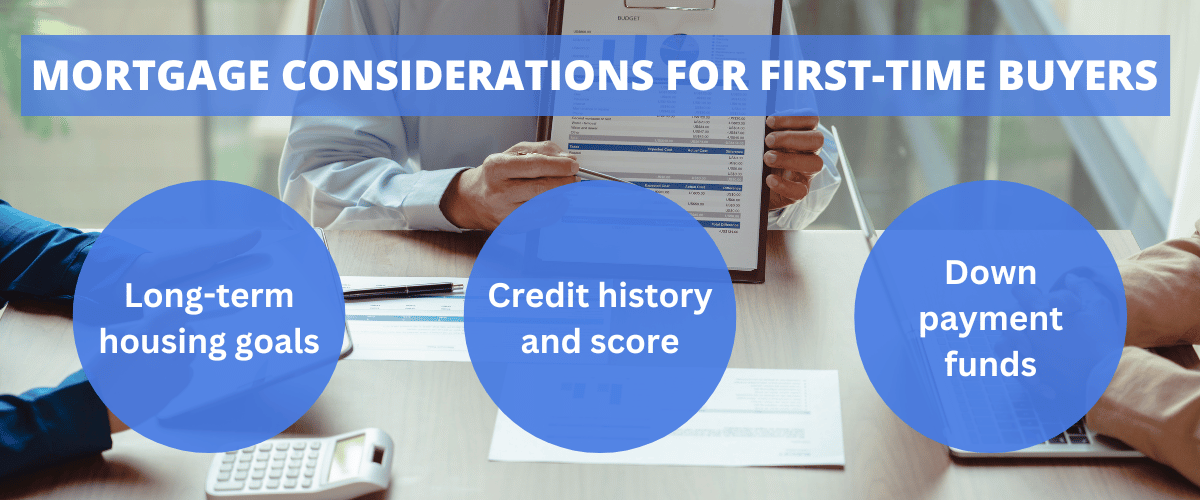
As a home buyer and borrower, you should thoroughly research all of your mortgage options to find the product or program that meets your individual needs.
In a sense, choosing the right mortgage loan comes down to two things:
- Your qualifications as a borrower, including your credit score and the amount of money you have saved for a down payment.
- Your priorities as a homeowner, such as whether you want to minimize your monthly payments in the short term or reduce the total interest paid over the long term.
Sure, you want to research the different home loan products and what they offer. But you also need to conduct a self-assessment to identify your financing needs and priorities. Only then can you identify and select the best financing option.
